Reiki
Universal life energy
What is Reiki?
Reiki is a gentle, holistic energy practice offered through light touch, with the hands resting on or just above different areas of the body.
Within the Reiki tradition, the practitioner acts as a channel rather than using their own personal energy. Reiki is allowed to flow without trying to force or control a particular result, creating space for the person to settle and respond in their own way.
The practice is holistic in the sense that the person is approached as a whole — body, mind and soul — rather than as an isolated symptom or single part of the body.
Rei, Ki & the flow of energy
The Japanese word Reiki — 霊気 brings together Rei — 霊, understood within Reiki teaching in relation to the spiritual, subtle or universal, and Ki — 気, connected with vitality and life force.
This is why Reiki is commonly described as “universal life energy.” The phrase is not a strict word-for-word translation, but reflects the traditional understanding of Reiki as a wider flow of life energy.
Within Reiki teaching, this energy is understood as not being limited by physical proximity and, in a broader energetic sense, by the ordinary boundaries of time and space. For this reason, Reiki can also be offered at a distance, without practitioner and receiver being in the same place.
Chakras & the energetic body
During an in-person treatment, the practitioner gradually moves through different areas of the body, placing the hands lightly on or just above them. This includes the main chakras.
The Sanskrit word chakra means wheel. The seven main chakras are understood in energy work as centres of the subtle body, extending along the central axis from the base of the body to the crown and relating to different aspects of our physical, emotional, mental and spiritual experience.
Origins & history
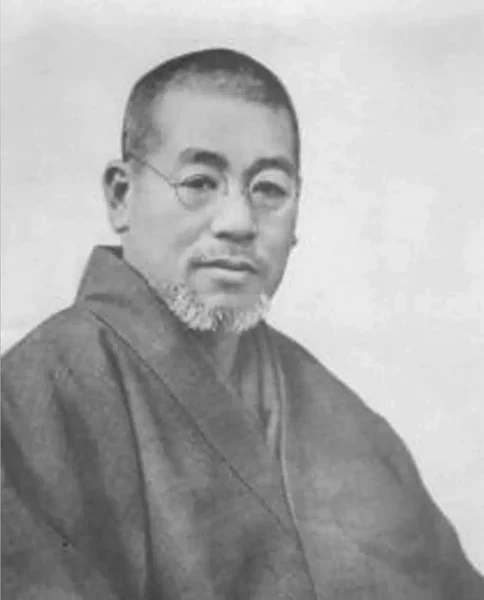
Modern Usui Reiki Ryōhō traces its development to Mikao Usui (1865–1926) in Japan. According to the memorial erected by his students after his death, Usui undertook a twenty-one-day period of fasting and spiritual discipline on Mount Kurama in 1922, an experience associated with the development of the Reiki method he later taught publicly in Tokyo.
For Usui, Reiki was not only a hands-on practice. It was also a path of personal and spiritual cultivation, involving meditation, daily practice and values such as gratitude, presence, diligence and kindness.
Later, Chūjirō Hayashi and Hawayo Takata played important roles in the transmission of Reiki beyond Japan and into the West.
Reiki is spiritual in nature, but it is not a religion. It does not require adherence to a particular doctrine or belief system and can be received by people of different faiths, spiritual paths, or none at all.
What brings people to Reiki
People often come to Reiki when they feel stressed, exhausted, overwhelmed or disconnected, or simply when they want a space for deep rest and reconnection.
A session may support a sense of relaxation, grounding, energetic balance, inner clarity and renewed vitality. Experiences vary: some people notice physical sensations such as warmth, heaviness or tingling; others experience emotions, imagery, stillness or simply a period of profound rest.
Reiki can also offer a supportive space during periods of transition or conscious change, when something in life is shifting or when there is a wish to reconnect more deeply with oneself. It can be received on its own or alongside bodywork and other forms of therapeutic support.
Arrive
We begin with a brief check-in — what brings you, how you are feeling and anything that may be useful for me to know. There is time to settle before the treatment begins.
Receive
You remain comfortably clothed, usually lying down. I move gradually through different areas of the body and the main energy centres, resting my hands lightly on the body or holding them just above it. There is no need to concentrate, visualise or make anything happen.
Integrate
After the treatment, there is time to settle, notice what is present and share anything that feels useful before leaving the space.
Space to arrive, receive and integrate.
Celestial Roots offers complementary bodywork and spiritual/energy-based practices. Sessions do not involve medical diagnosis and are not a substitute for medical, psychiatric or licensed psychotherapeutic care.
Begin with a conversation.
The complimentary first meeting is a space to talk about what brings you, ask questions and see whether working together feels right.
Request a first meeting